
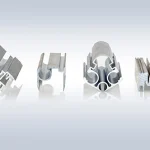
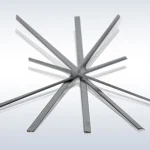
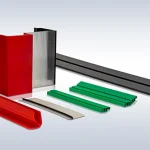
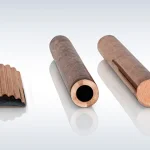
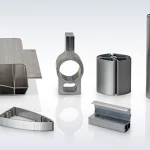
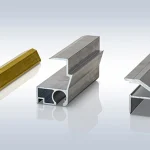
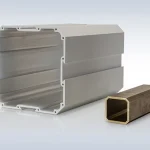
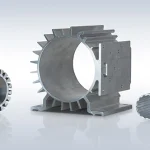






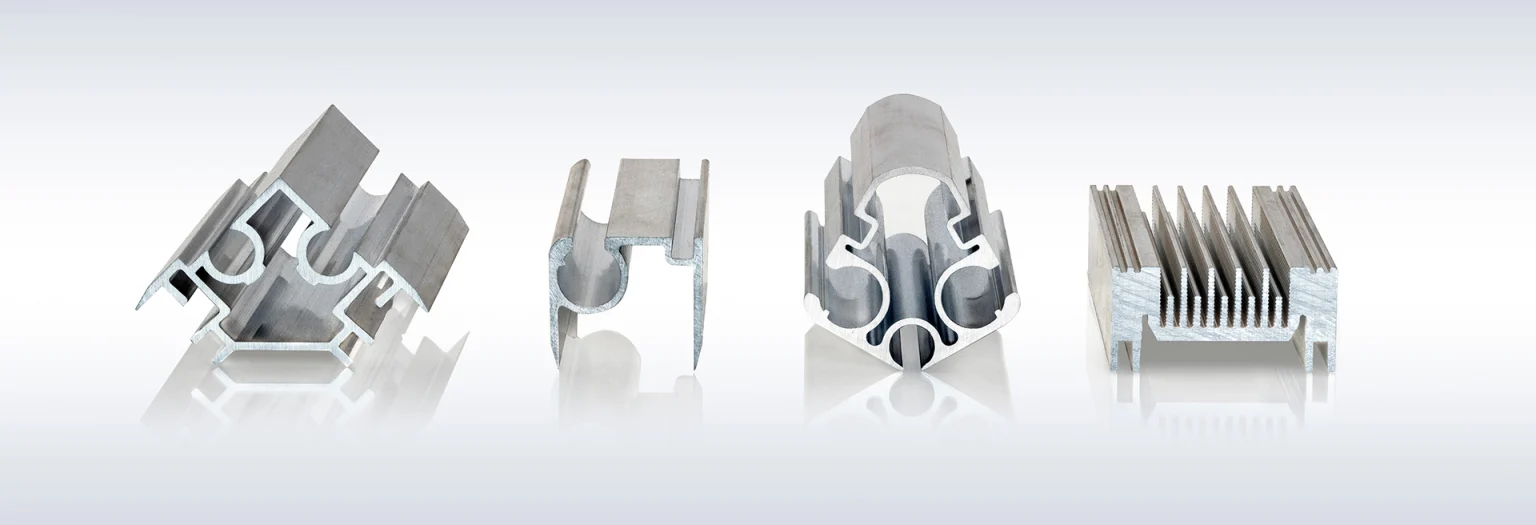
Aluminium profile manufacturer
We produce the right product for every application
We manufacture the majority of our products from aluminium. The material is easy to process, has a low density and is corrosion resistant. Furthermore, aluminium is very easy to recycle.
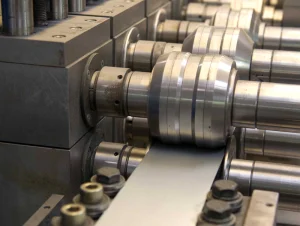
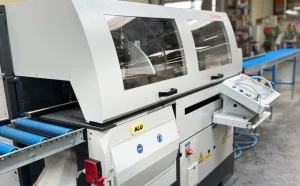
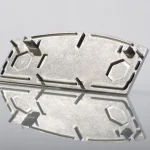
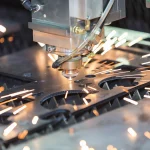
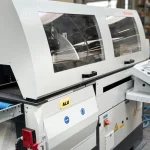
On request, we can also manufacture your aluminium profile with an anodised finish or other suitable surface finish. In production engineering and with corresponding batch sizes, we work with specially developed special machines to ensure the highest quality and precision for every aluminium profile.
Do you just need a single aluminium profile? No problem – we also produce one-off parts. Just contact us with your requirements.
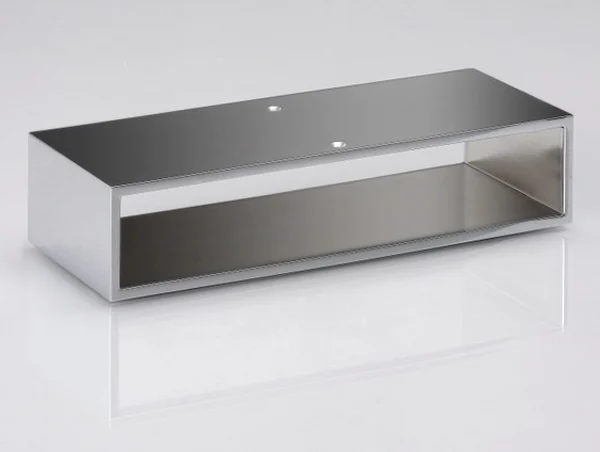
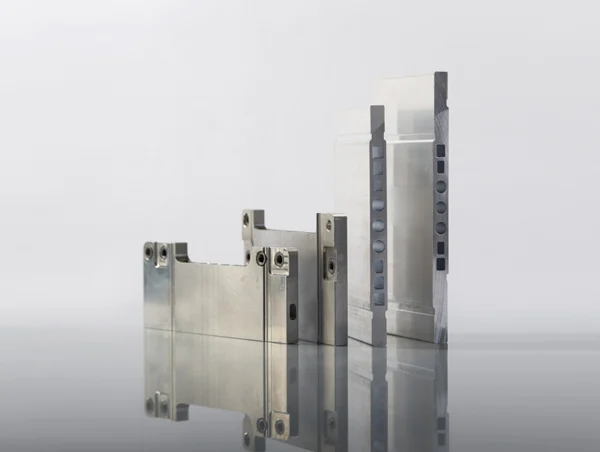
Precise manufacturing, flexible application: the extruded profile
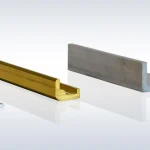
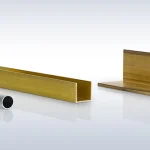
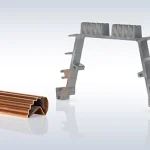
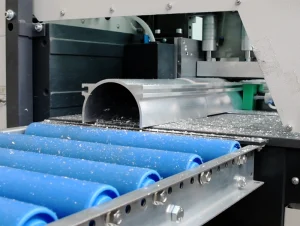
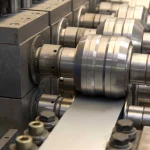
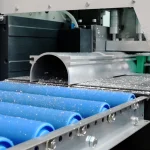
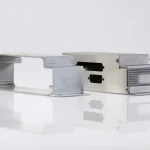
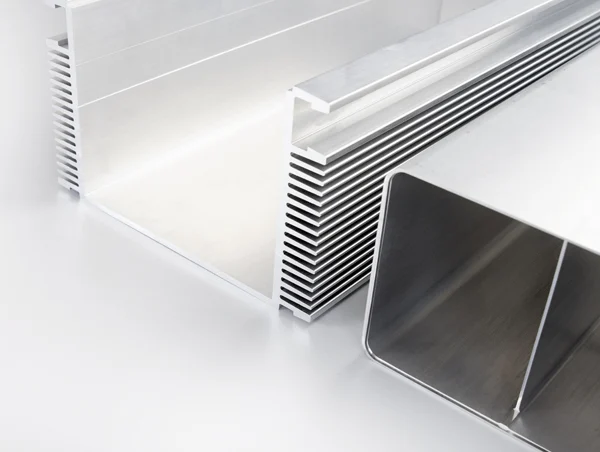
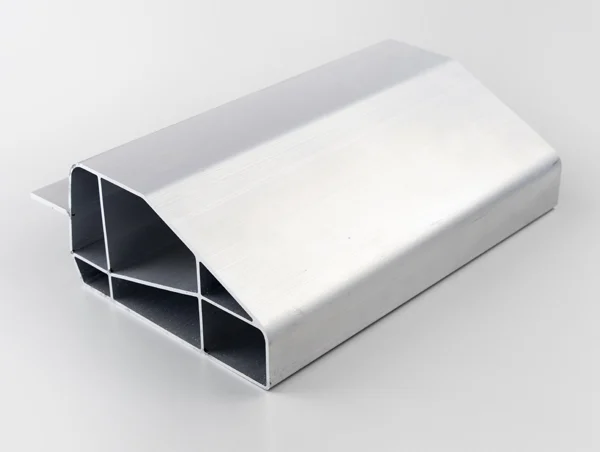
IsoProfil is specialised in extruded aluminium profiles. An extruded profile produced by the direct extrusion process is formed by pressing a billet through a forming die under high pressure by means of a punch. In the field of extrusion, we achieve, on request, an exceptionally high precision, which is above the standards DIN EN 12020-2 and DIN EN 755-9. With innovative techniques and technology, we work, depending on the profile geometry, with tolerances down to ± 0.01 mm and can offer any desired extruded profile in various shapes and sizes and with optimum surface finish. Other materials such as brass are also used.
The advantages of aluminium profiles
Corrosion resistance
Aluminium is a corrosion-resistant metal that creates a natural protective layer. The coating formed is extremely thin and is created when aluminium comes into contact with an oxidising atmosphere. This protective aluminium oxide layer helps to protect the surface of the metal from corrosion. In addition, a surface treatment such as painting or anodising can further improve the general corrosion resistance of the metal.
Lower transport costs thanks to low weight
It is a well-known light metal with a weight of around 2.71 g/cm³. It has roughly one-third of the weight of steel, making it easier and cheaper to transport than most other metals. The strength of aluminium can be modified by using different alloying elements to give it other advantages such as higher strength or easier shapeability.
Environmentally friendly
Contrary to what most people think, aluminium is 100% recyclable. During production, it is less expensive to use recycled metal than virgin metal from the ground. For this reason, as much recycled material as possible is used during production.
Cost-efficient thanks to easy processing and machining of the material
The special properties of aluminium make it far easier to process than other metals. In combination with its high durability, it offers a very cost-effective solution for all kinds of profiles.
Fields of application for aluminium
In view of its high corrosion resistance, low density and the fact that it is easy to process, aluminium can be used in a wide range of applications and is therefore our most popular material for our profiles.
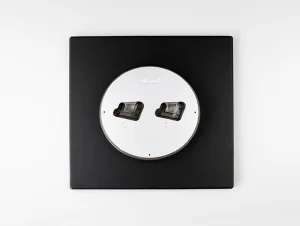
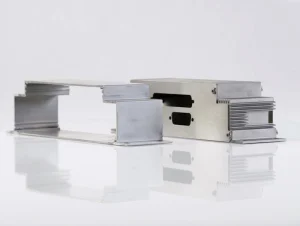
- Monitor housings
- Spacers for insulated glazing
- Flame protection
- Conductive wires
- Cooling plates for accumulators
- Housings for motors in electric vehicles
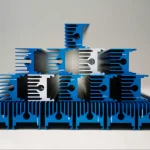
- Heat sinks
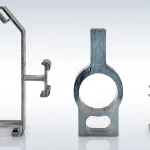
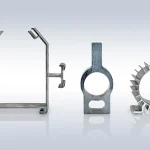
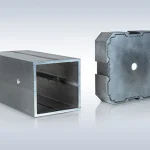
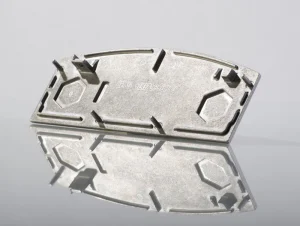
- Individually manufactured custom profiles
Further processing of aluminium profiles
IsoProfil can refine the surfaces of your aluminium profiles by means of electrochemical processes. These include, for example, anodising and electroplating.
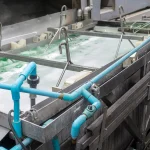
During anodising, the outermost metal layer is converted into an oxide or hydroxide to form a thin, glass-hard coating that protects the underlying layers from corrosion and other external, predominantly mechanical influences.
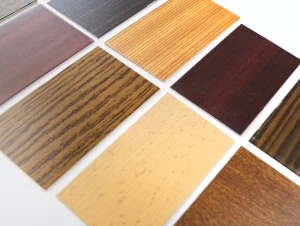
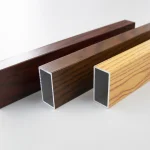
Furthermore, anodising also offers numerous additional design options for aluminium profiles, such as different colour finishes. A galvanic coating of aluminium is also possible. Further possibilities of surface finishing include painting, powder coating and gilding.
Aluminium alloys
| Material number | ASW 205 | ASW 209 | ASW 210 | ASW 220 | ASW 510 |
|---|---|---|---|---|---|
| Material abbreviation (according to DIN EN) | AlMgSi0.5 | AlSiMg(A) | AlSi1MgMn | AlCu4Mg1 | AlZnMgCu1.5 |
| Alloy components in % | Si 0.3 - 0.6 Fe 0.1 - 0.3 Cu 0.1 Mn 0.1 Mg 0.35 - 0.6 Zn 0.15 others 0.15 | Si 0.5 - 0.9 Fe 0.35 Cu 0.3 Mn 0.5 Mg 0.4 - 0.7 Zn 0.7 others 0.15 | Si 0.7 - 1.3 Fe 0.5 Cu 0.3 Mn 0.5 Mg 0.4 - 0.7 Zn 0.2 others 0.15 | Si 0.5 Fe 0.5 Cu 3.8 - 4.9 Mn 0.3 - 0.9 Mg 1.2 - 1.8 Zn 0.25 others 0.15 | Si 0.4 Fe 0.5 Cu 1.2 - 2 Mn 0.3 Mg 2.1 - 2.9 Zn 5.1 - 6.1 others 0.15 |
| Density | 2.8 | 2.78 | 2.77 | 2.77 | 2.7 |
| Properties | |||||
| 1) Cold formability | well suited | suitable | well suited | suitable | unsuitable |
| 2) Hot formability | well suited | well suited | well suited | suitable | unsuitable |
| 3) Coating | well suited | well suited | well suited | suitable | suitable |
| 4) Protective anodising | well suited | well suited | well suited | well suited | suitable |
| 5) Decorative anodising | well suited | well suited | suitable | unsuitable | unsuitable |
| 6) Machinability | well suited | well suited | well suited | well suited | well suited |
| 7) Weldability | well suited | suitable | well suited | suitable | suitable |
| 8) Solderability | well suited | unsuitable | suitable | suitable | unsuitable |
| 9) Corrosion resistance | well suited | well suited | well suited | unsuitable | unsuitable |
| Possible applications | Mechanical engineering Automotive Decorative purposes Interior fittings Food industry | Automotive Electrical industry Shipbuilding Apparatus engineering Container construction | Aviation Load-bearing structures Mechanical engineering Offshore industry Shipbuilding | Aviation Aerospace Automotive Mechanical engineering Construction industry | Mechanical engineering Automotive Aviation Mould making Toolmaking |
| further alloys on request | |||||
Aluminium profiles – FAQ
EN AW-6060 and EN AW-6063 are very well suited to extruded profiles and offer good surface quality. EN AW-6082 achieves higher strengths but is more demanding with complex cross-sections and certain surface requirements. Which alloy makes sense depends on the design and the area of application.
The possible tolerances depend on the dimensions, geometry and wall thicknesses of the profile, among other things. Depending on the requirements, the relevant standard tolerances apply to extruded aluminium profiles, for example according to EN 755-9 or EN 12020-2. Tighter tolerances can sometimes be achieved through additional machining.
The possible bar length depends on production and transport. Common commercial and production lengths can be agreed individually. For customer-specific lengths and cut-to-size pieces, we check the technical and logistical options.
The minimum wall thickness that makes economic and technical sense depends largely on the alloy, profile size and geometry. Uniform wall thicknesses and a balanced geometry make extrusion easier. We check your specific design and advise you on how to make it suitable for extrusion.
The cost of a die depends largely on the profile cross-section, size, complexity, alloy and die design. Simple profiles are generally less expensive than complex multi-cavity profiles. Once we have checked your drawing, we can provide a specific quotation for the die.
Depending on complexity and capacity, making a die typically takes several weeks. Once the technical requirements have been checked, we can give you a specific date for the die and the first samples.
The minimum quantity depends on the profile, the alloy, the surface treatment and the production batch. When you send us an enquiry, we can tell you the minimum quantity that applies to your project.
Both processes are very common for aluminium profiles. Among other things, anodising provides a high-quality metallic surface and increases the surface hardness. Powder coating offers a wide choice of colours and coating systems.
In principle, machining after anodising is possible. However, the protective layer is interrupted at the machined areas. If certain areas have to be machined later, the order of machining and surface treatment should already be considered when planning the project.
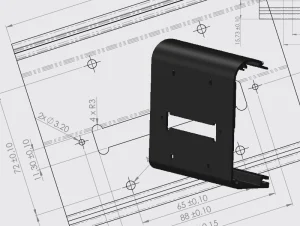
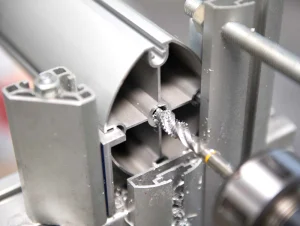
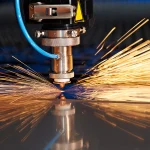
Depending on the scope of supply, profiles can, for example, be milled, drilled, countersunk or threaded. The machining can be agreed on the basis of 2D drawings or 3D CAD data.
Since steel is characterised by a higher density, and hence stronger and can withstand correspondingly higher loads, it requires far more intensive processing. Aluminium has a melting point of only 660°C, although it starts to soften at around 210°C. Steel, on the other hand, has to be heated to a temperature of 900-1500°C. In addition, aluminium also has a natural resistance to corrosion. Unlike steel which requires additional treatment, aluminium does not rust. Aluminium is therefore the more cost-efficient metal for profiles.
Aluminium is up to 100% recyclable and produces 92% less carbon dioxide than during the initial processing.
For more than 40 years, IsoProfil has specialised in precision profiles and profile systems, achieving tolerances up to 20 times tighter than those specified by DIN EN 12020-2 and DIN EN 755-9. We support our customers in the design of aluminium profiles, enabling weight and production optimisations while guaranteeing function. Further processing and surface treatment through to the assembly of modules make IsoProfil a complete system partner for demanding products.
With high precision, individual profile development, a comprehensive machining service and technical advice, IsoProfil achieves efficient solutions for industrial applications. When the use of the aluminium profiles is being defined, weight, stability and material usage can be optimised.
Thanks to its good strength, low weight and good corrosion resistance, aluminium is particularly well suited to durable industrial applications. At the same time, aluminium is fully recyclable.
The delivery time depends on the required version of the profile or product, e.g. surface finish and CNC machining. The special profile itself can be delivered within 6–8 weeks. First samples are ready for dispatch within 3–4 weeks.
Aluminium profiles are the right choice when plant layouts change frequently; for robot arms or linear axes, to save energy costs through lower weight; to save time, as they can be used without much effort; and in medical applications because of their cleanliness
- Higher mechanical load capacity
- Excellent sliding properties
- Higher corrosion resistance
- Better electrical conductivity
- Higher strength
- Excellent machinability
- High-quality appearance