
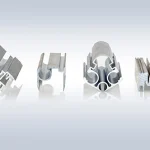
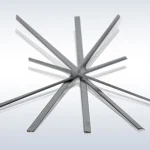
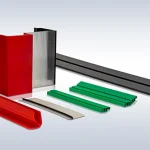
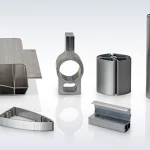
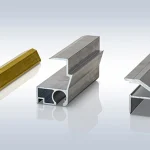
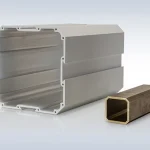
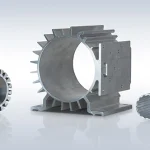
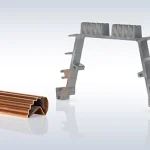
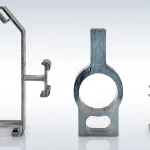
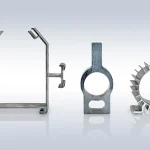





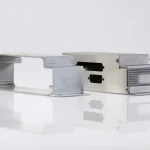

Extruded profile manufacturer
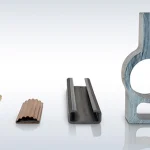
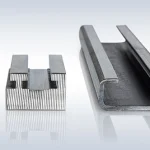
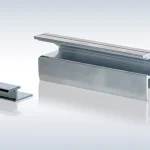
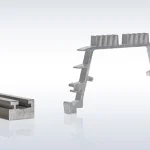
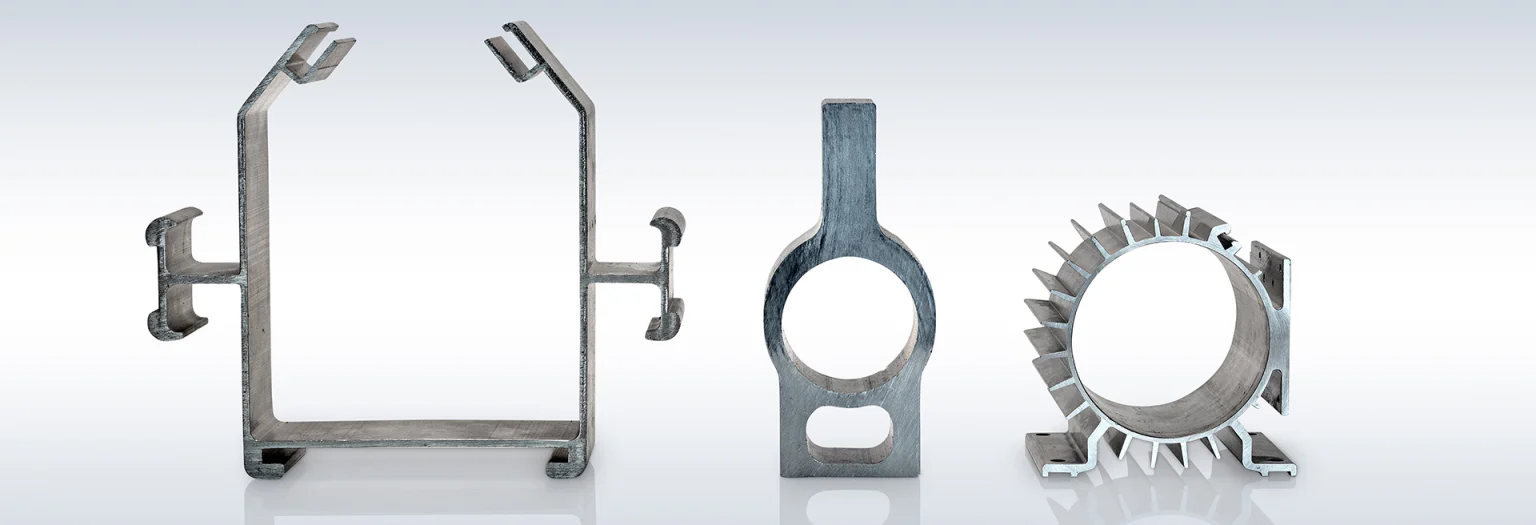
By comparison with the extrusion standard defined in DIN EN 12020-2 and DIN EN 755-9, we offer you profiles with a precision that is up to 20 times higher. Depending on the profile geometry, we work in production with very close tolerances down to ± 0.01 mm. We can offer any desired extruded profile in various shapes and sizes and with optimum surface finish. Other materials, such as brass, are also used.
Our extruded profiles at a glance
The advantages of our extruded profiles
High precision
20 times higher precision than the extrusion standard of DIN EN 12020-2 and DIN EN 755-9.
Wide range of possibilities
The degree of precision that we achieve in production gives you a wide range of possibilities. Designers and engineers are very free in their design because our extruded profiles do not tie them to conventional standard specifications.
Small batch sizes
A major advantage that IsoProfil offers you as a manufacturer of extruded profiles is the production of small batch sizes. We employ complex production lines, such as in CNC machining, surface finishing or assembly so that we can supply you with completely finished profiles.
Complex profile geometries can be formed
This manufacturing process can also be used to produce complicated profile geometries and specially shaped cavities, for example.
From the design to the final profile
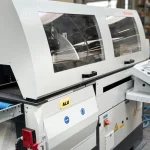
We use high-quality, complex production equipment for manufacturing, for example for CNC machining, assembly and surface treatment. This way we can supply you with completely finished profiles.
Complex shapes and sizes
We manufacture profiles with complex shapes and sizes, with optimum surface finishing and very thin walls down to 1.1 mm.
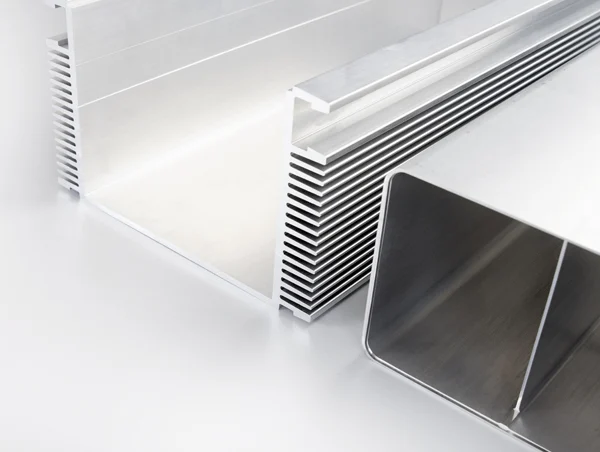
Extruded aluminium profiles
IsoProfil is at your side as an experienced specialist when it comes to the production of extruded aluminium profiles. The extruded aluminium profiles are used in a large number of products and in practically every industry.
Furthermore, our innovative techniques and technologies allow us to produce extruded aluminium profiles with complex forms and sizes, extremely thin walls (e.g. 0.3 mm) and optimum surfaces also suitable for gloss anodising.
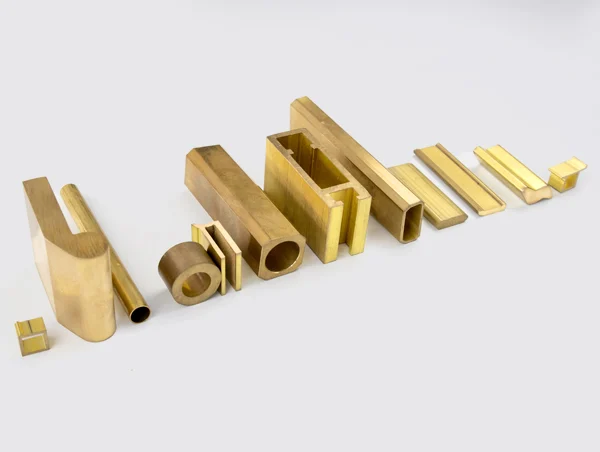
Extruded brass profiles
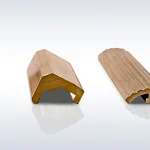
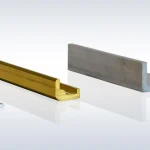
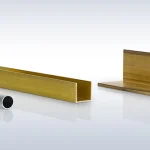
Brass profiles are suitable for numerous fields of applications and are manufactured and finished in many different versions and cross-sections. They are used not only in the building industry, but also in living room decoration, interior outfitting and modelmaking.
As they are easy to machine, they can be easily formed into a wide range of desired shapes. Our brass profiles are used, for example, as decorative highlights in aircraft construction and shipbuilding – and particularly in their VIP interior outfitting. In addition they are used in showcases for high-quality exhibits, as façade elements and in the fittings industry.
- Slide elements
- Hinge strips
- Showcases for high-quality exhibits
- Contact elements in electrical engineering
- Busbars for craneways
- Façade elements
- Surfaces also with burnished finish
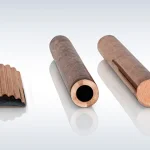
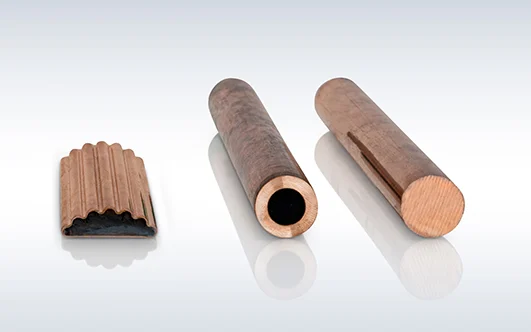
Extruded copper profiles
As an expert for the production of copper profiles and extruded copper profiles, IsoProfil has vast know-how when it comes to the production of copper parts using alternative manufacturing methods. Extruded copper profiles are used in many special branches of industry and in various applications.
Copper extrusion profiles are used for:
- Electrical engineering: switches, busbars, generators, terminals
- Electric motors
- Hollow profiles for busbars, transformers, generators
- Façade elements
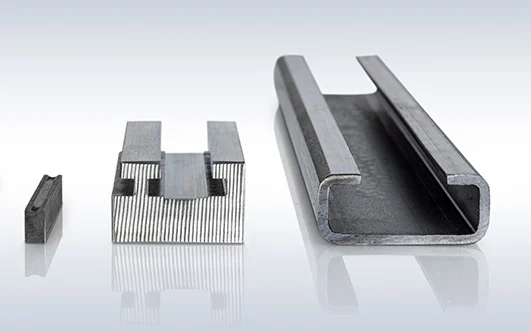
Extruded steel profiles
Steel alloys have the most varied properties in terms of strength, shapeability, corrosion behaviour and weldability. Steel scrap can be melted down and recycled, thus conserving resources as well as protecting the environment. The addition of steel refiners such as chrome, manganese, cobalt, vanadium, molybdenum, tungsten and niobium simplifies processing or ensures corrosion resistance, as with stainless steel.
The fields of application for steel and stainless steel profiles range from floor covering profiles to building profiles and construction engineering.
- Machine engineering
- Building & civil engineering
- Building profiles
- Bridge construction
- Floor covering profiles
- Construction engineering
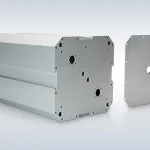
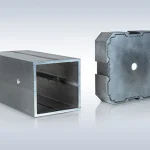
Extruded profile with cavities
Extrusion offers many advantages. This manufacturing process can also be used to produce complicated profile geometries and specially shaped cavities, for example. In addition, extruded profiles can be made from materials that are difficult to form. To create cavities, an appropriately shaped mandrel is also inserted. The production of extruded hollow profiles requires additional tooling.
Fields of application for our extruded profiles
The extruded profiles are used in many different products and almost all industries.
- Aerospace industry
- Shipbuilding industry
- Vehicle construction
- Construction industry
- Engineering
- Displays
- Roller shutters
- Garages
- Carports
- and many more
About the extrusion process
Extrusion means: A pellet (round, oval or rectangular) heated to forming temperature from the desired raw material is pressed by means of a punch, usually hydraulic, under high pressure through the forming die. The outer shape of the extruded profile to be produced is determined by the outer contour of this die.
Different extrusion processes
There are different procedures: Direct and indirect extrusion as well as hydrostatic extrusion, in which the extrusion force is not applied to the billet directly by the punch, but by a so-called active medium, such as water or oil. Extrusion is one of the forming processes according to DIN 8582 and is defined in more detail in DIN 8583.
Extruded profiles – FAQ
Extruded aluminium profiles are used in almost all industries. In addition to aluminium extrusion, we also offer extrusion profiles in copper, brass & steel.
- Maximum circumscribed circle Ø 600 mm
- Weight per metre up to 24 kg/m, in combination (e.g. friction stir welded) up to 48 kg/m
On request, we will produce a prototype for each of your requirements that still allows for desired modifications. Here you will find all the services that we offer.
That depends entirely on the field of application. We will be happy to advise you on materials, alloys and further demands for your profile. You are welcome to contact us directly.
EN AW-6060 and EN AW-6063 are very well suited to extruded profiles and offer good surface quality. EN AW-6082 achieves higher strengths but is more demanding with complex cross-sections and certain surface requirements. Which alloy makes sense depends on the design and the area of application.
The possible tolerances depend on the dimensions, geometry and wall thicknesses of the profile, among other things. Depending on the requirements, the relevant standard tolerances apply to extruded aluminium profiles, for example according to EN 755-9 or EN 12020-2. Tighter tolerances can sometimes be achieved through additional machining.
The minimum wall thickness that makes economic and technical sense depends largely on the alloy, profile size and geometry. Uniform wall thicknesses and a balanced geometry make extrusion easier. We check your specific design and advise you on how to make it suitable for extrusion.
The cost of a die depends largely on the profile cross-section, size, complexity, alloy and die design. Simple profiles are generally less expensive than complex multi-cavity profiles. Once we have checked your drawing, we can provide a specific quotation for the die.
Depending on complexity and capacity, making a die typically takes several weeks. Once the technical requirements have been checked, we can give you a specific date for the die and the first samples.
From an outside diameter of 3.5 to 5 mm, continuous round channels can be produced directly by the die. Smaller ones only as a screw channel (C-shape)