
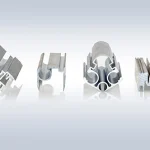
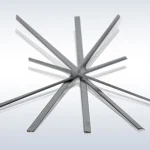
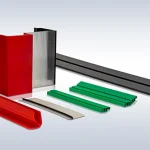
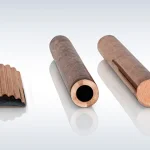
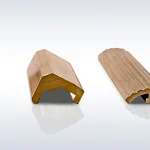
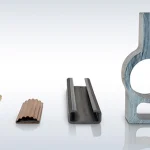
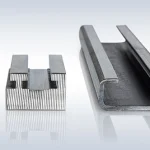
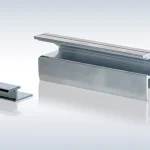
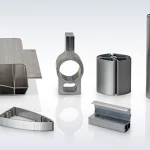
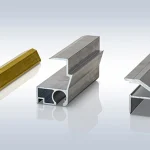
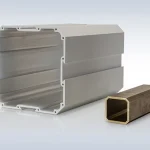
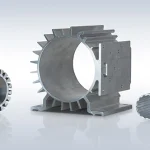








Steel profile manufacturer
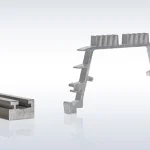
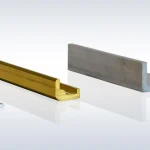
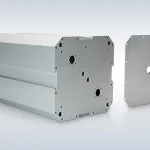
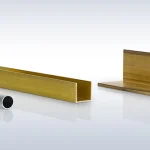
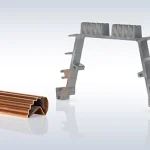
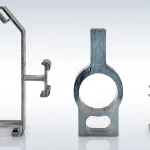
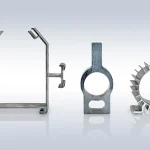
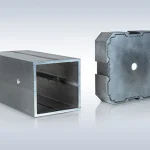
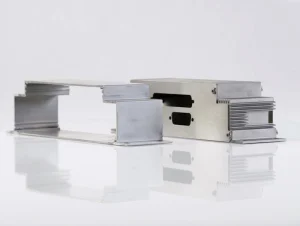
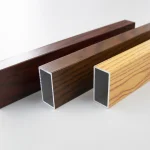
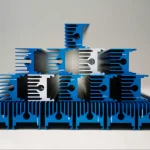
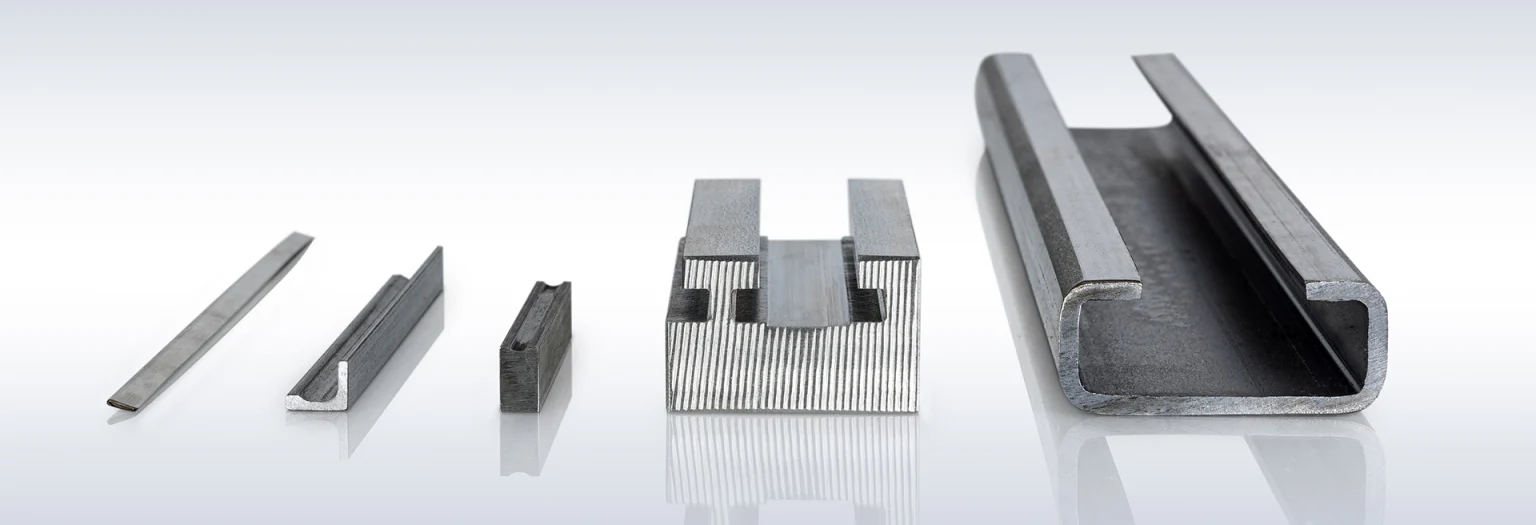
In addition to profiles of brass, copper, aluminium, stainless steel and other materials, we also offer steel profiles as standard profiles or custom solutions tailored exactly to your specifications. Whether as a single steel profile or series production – we maintain the highest standards of quality in production for every profile and guarantee punctual just-in-time delivery.
The advantages of steel profiles
Wide range of applications
Steel alloys have the most varied properties in terms of strength, shapeability, corrosion behaviour and weldability.
Environmentally friendly
Steel scrap can be melted down and recycled, thus conserving resources as well as protecting the environment.
Corrosion-resistant & easy to process
The addition of alloying elements such as chromium, manganese, cobalt, vanadium, molybdenum, tungsten and niobium makes processing easier or ensures corrosion resistance, as with stainless steel.
Steel profiles to meet specific requirements
The profiles are manufactured in close coordination with you and are oriented to the individual demands that you make on the profile systems or assemblies.
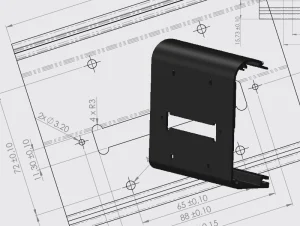
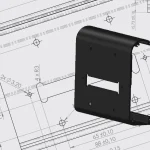
From the preparation of a manufacturing drawing through the construction of a prototype right up to the start of (series) production, you are involved in every step. Only after we have received your approval is the final profile produced.
In order to ensure the quality of all the products, various quality tests are carried out during the course of development based, for example, on FMEA guidelines.
Fields of application for our steel profiles
The fields of application for steel and stainless steel profiles range from floor covering profiles to building profiles and construction engineering.
- Machine engineering
- Bridge construction
- Building & civil engineering
- Floor covering profiles
- Building profiles
- Construction engineering
Steel profiles – FAQ
Customer-specific profiles can be designed and manufactured on the basis of drawings, CAD data or samples. Geometry, material, tolerances, surface and the required delivery lengths are all taken into account.
Depending on the application, different steel grades are used, for example structural steels such as S235JR and S355JR as well as stainless and higher-strength steels. The right choice of material depends on strength, corrosion resistance, temperature, ambient conditions and processing.
Standard profiles are manufactured in standardised or commonly used dimensions. Special profiles are developed specifically to customer requirements and can be individually adapted in terms of cross-section, material, tolerances and surface.
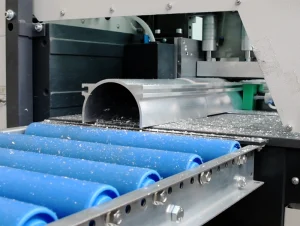
Depending on the manufacturing process, steel profiles can be supplied in fixed lengths or in agreed standard lengths. Cut lengths can be specified individually.
In principle, smaller quantities are also possible. However, the minimum quantity that makes economic sense depends largely on the manufacturing process, tooling effort, material requirements and profile cross-section.
The tooling costs depend on the profile cross-section, complexity, material and manufacturing process, among other things. For special profiles, the tooling costs are usually calculated separately.
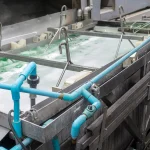
Depending on the material and the area of application, galvanising, painting, powder coating, pickling, passivating or other surface treatments are possible, for example.
Yes. For special profiles, we can optimise the design together. Material usage, weight, stability, manufacturability and costs, for example, can all be taken into account.
The weight is calculated from the cross-sectional area, length and density of the material. For steel, a density of around 7.85 g/cm³ or 7,850 kg/m³ is commonly used.
Depending on the material and customer requirements, the corresponding material and inspection certificates can be agreed and provided.
We offer steel standard profiles, but our core business is the production of customised steel profiles. If required, our experienced specialists will work with you to draw up a catalogue of requirements and present cost-effective product solutions that also take design aspects and further processing into consideration.
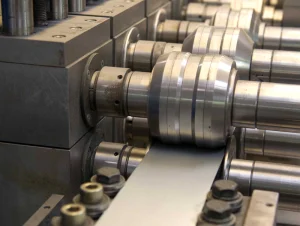
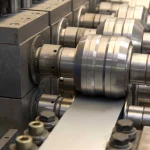
Steel profiles are usually given their shape by hot rolling. Steel scrap is often used because it is easily recyclable; it is then heated to a high temperature in a melting furnace and cast into blooms in the next step on a continuous casting machine. The blooms are then cut to the required length. During hot rolling, the steel is preheated to a temperature of around 1250°C and then rolled into the desired shape. The final steps are the straightening and sawing of the steel beams.
Steel profiles are the right choice for extreme loads, e.g. in hall constructions; where vibrations and oscillations occur, as they have a higher inherent damping; at very high temperatures or in contact with chemicals; and, with a view to costs, in large projects with thousands of identical profiles/applications
Yes, but bear in mind that contact corrosion will occur if humidity, condensation or coolant come into play. The profiles should therefore be coated, or special screws should be used. In dry environments this corrosion does not occur, and the profiles can be combined without hesitation.