
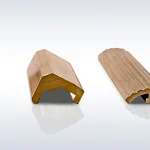
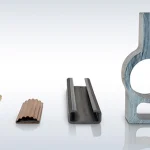
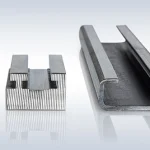
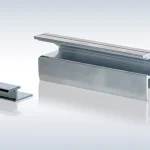
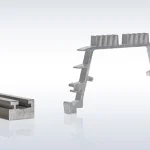
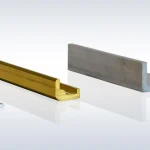
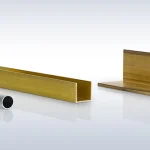










Brass profile manufacturer
Brass is one of the best known copper alloys and consists mainly of the metals copper and zinc. Its colour is determined by the zinc content and can range from brownish-red to light yellow or whitish-yellow. Because of its gold-like appearance, brass has been used in artistically designed consumer goods since antiquity. Today its properties are used as an electrically conductive material in antennae and waveguides.
Custom brass profiles
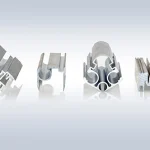
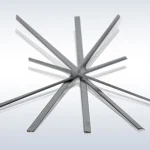
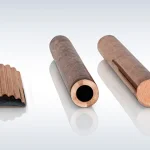
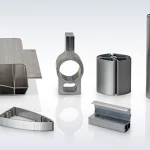
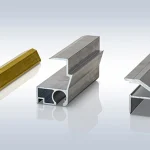
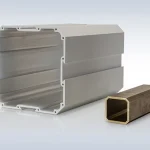
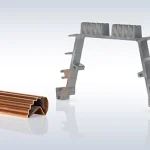
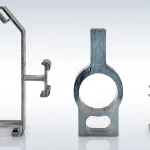
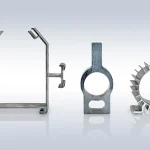
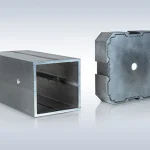
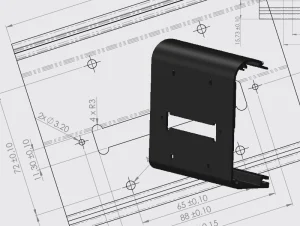
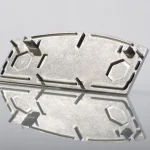
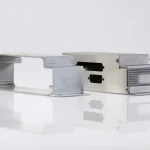
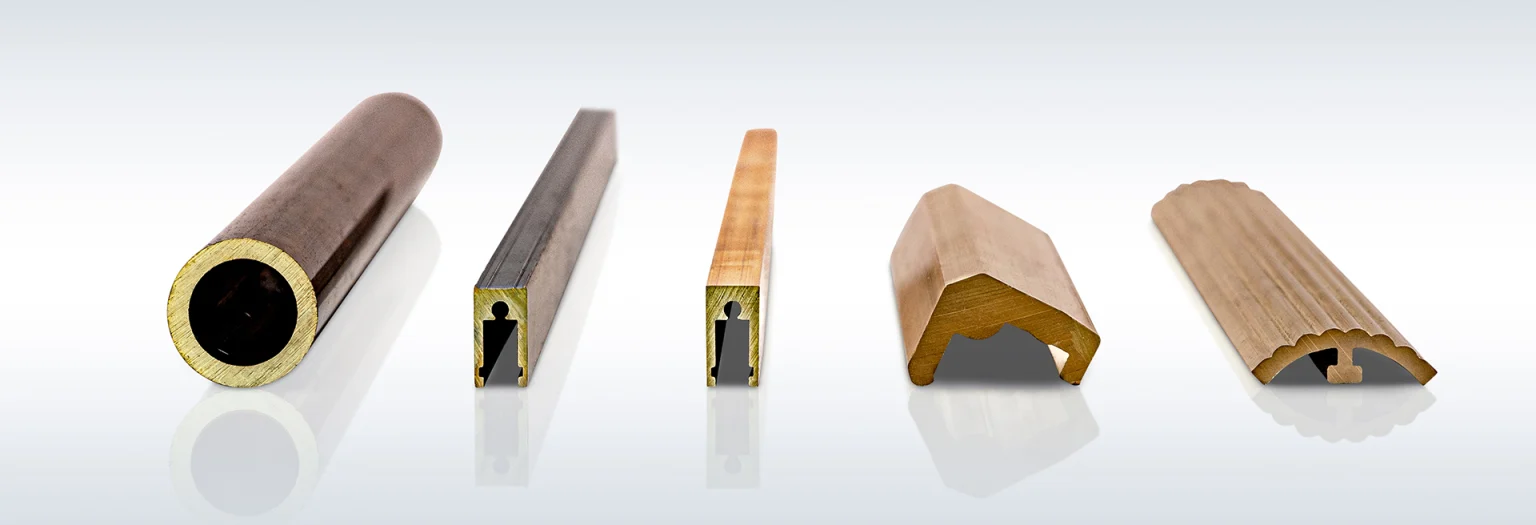
We manufacture custom brass profiles for you with an up to eight times higher precision than the extrusion standard according to DIN EN 12167 and DIN EN 12615. Depending on the profile geometry, we manufacture in size ranges with very close tolerances of 0.1 mm. This enables us to produce brass profiles with complex shapes and sizes, extremely thin walls and optimum surface finishing.
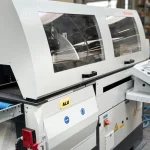
Through the use of complex production lines, IsoProfil can supply you with completely finished profiles. There are practically no limits to customer-specific requirements. We will be happy to advise you on possible designs and finishes.
The advantages of brass profiles
Easy to process
Because brass is easy to process, it can be formed into a wide variety of shapes.
Elegant appearance
Typical applications for a brass profile are handrails for railings, sliding and contact elements and showcases for high-quality exhibits. Brass profiles are also frequently used in aircraft and ship interiors – preferably in the VIP area.
High corrosion resistance & durability
Brass is highly resistant to corrosion. It can also withstand high temperatures and is very durable.
Fields of application for our brass profiles
Brass profiles are suitable for numerous fields of applications and are manufactured and finished in many different versions and cross-sections. They are used not only in the building industry, but also in living room decoration, interior outfitting and modelmaking. As they are easy to machine, they can be easily formed into a wide range of desired shapes. Our brass profiles are used, for example, as decorative highlights in aircraft construction and shipbuilding – and particularly in their VIP interior outfitting. In addition they are used in showcases for high-quality exhibits, as façade elements and in the fittings industry.
- Handrails for railings
- Hinge strips
- Contact elements in electrical engineering
- Busbars for craneways
- Façade elements
- Showcases for high-quality exhibits
- Surfaces also with burnished finish
- Aircraft, ship and interior outfitting
Brass alloys
| Material number | MSW 057 | MSW 062 | MSW 055 |
|---|---|---|---|
| Material abbreviation (according to DIN EN) | CuZn39Pb3 | CuZn37 | CuZn43Pb2Al |
| Common name | MS58 | MS63 | MS56 |
| Alloy components in % | Cu 57 - 59 Pb 2.5 - 3.5 Ni 0.3 Fe 0.5 Sn 0.3 Al 0.05 others 0.2 | Cu 62 - 64 Pb 0.1 Ni 0.3 Fe 0.1 Sn 0.1 Al 0.05 others 0.1 | Cu 55 - 57 Pb 1.6 - 3 Ni 0.3 Fe 0.3 Sn 0.3 Al 0.05 - 0.5 others 0.2 |
| Density | 8.45 | 8.44 | 8.40 |
| Properties 1. Cold formability 2. Hot formability 3. Polishing 4. Electroplating 5. Machinability 6. Weldability 7. Solderability 8. Corrosion resistance | well suited suitable well suited well suited unsuitable unsuitable well suited well suited | well suited suitable well suited well suited unsuitable well suited well suited well suited | unsuitable well suited suitable well suited well suited unsuitable well suited well suited |
| Possible applications | Fittings industry Turned parts Electrical engineering Precision engineering Lock cylinders | Fittings industry Bathroom equipment Façade construction Capacitors Lighting industry | Turned parts Sanitary industry Mechanical engineering Furniture industry Pipeline construction |
Further alloys on request
Brass profiles – FAQ
Brass is used wherever good electrical and thermal conductivity, easy machinability, mechanical sliding properties or an attractive appearance are required, e.g. in heating and plumbing, electrical engineering, mechanical engineering, precision engineering, musical instruments and design
Bars, wires, tubes, sheets and strips, profiles (standard and special shapes), but also cast shapes
- Higher mechanical load capacity
- Excellent sliding properties
- Higher corrosion resistance
- Better electrical conductivity
- Higher strength
- Excellent machinability
- High-quality appearance
- Better cost-effectiveness
- Higher strength
- Excellent machinability
- Better wear resistance
- Specific corrosion protection
The relevant DIN standards generally apply to
- Bars and profiles (DIN EN 12164)
- Tubes (DIN EN 12449)
However, IsoProfil can also achieve tolerances that differ from these DIN standards. We will be happy to check individually what is feasible.
Brass is a highly developed and sustainable material that is 100% recyclable. It offers enormous energy savings, as melting it down requires only a fraction of the energy needed for other metals. Thanks to its extreme corrosion protection, brass is very durable. Its only disadvantage is the lead content.
Yes, lead-free alloys already exist, as well as alloys with a very low lead content that also meet the RoHS and REACH requirements
- Grinding
- Brushing
- Polishing
- Blackening
- Painting
- Chrome plating
- Nickel plating
- Powder coating
- Contact with salt water and seawater
- Contact with acidic liquids
- Highly stressed lightweight construction
- High-temperature applications
- Tools subject to heavy wear
Brass is electrically and thermally conductive, but compared with copper or silver it is only mid-range
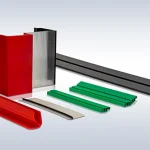
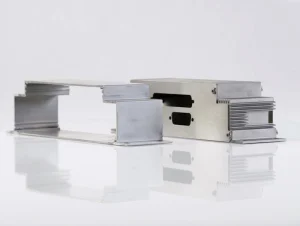
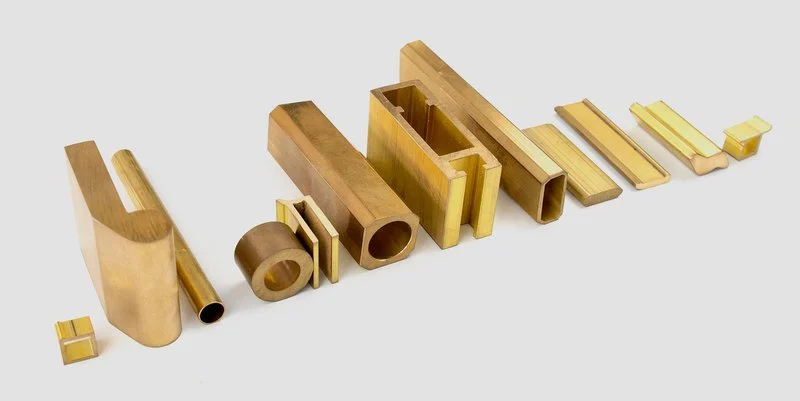
We manufacture brass profiles as standard profiles as flat, L, U, T and Z profiles (FLUTZ), but also profiles with very special requirements. To our special profiles.
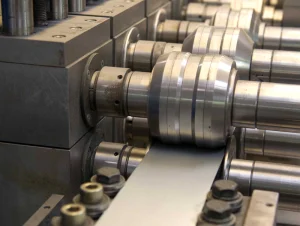
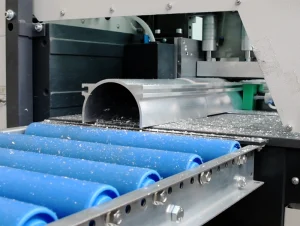
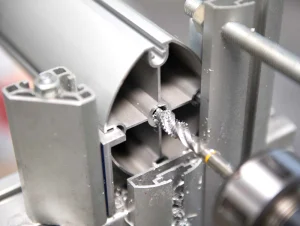
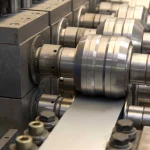
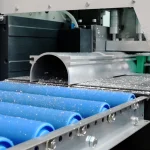
Various methods can be used for the production of brass profiles. For example, drawing or milling. Milled brass profiles often have quite sharp edges after production so that finishing may be necessary. Drawn brass profiles, on the other hand, have rounded edges. Brass profiles can be further processed by relatively easy means. A hacksaw or circular saw is all that is needed to cut the brass profiles. In addition, the profiles are soldered or glued, if necessary.
- Superior corrosion resistance
- Significantly higher electrical conductivity, 3–4 times better than brass
- Superior thermal conductivity, twice as high as brass
- Better formability
Yes, but only for certain areas, such as sliding and guide elements because of their low abrasion, or in electrical engineering as busbars/connectors. Also in housings for liquids or in micro-engineering because of their excellent machinability